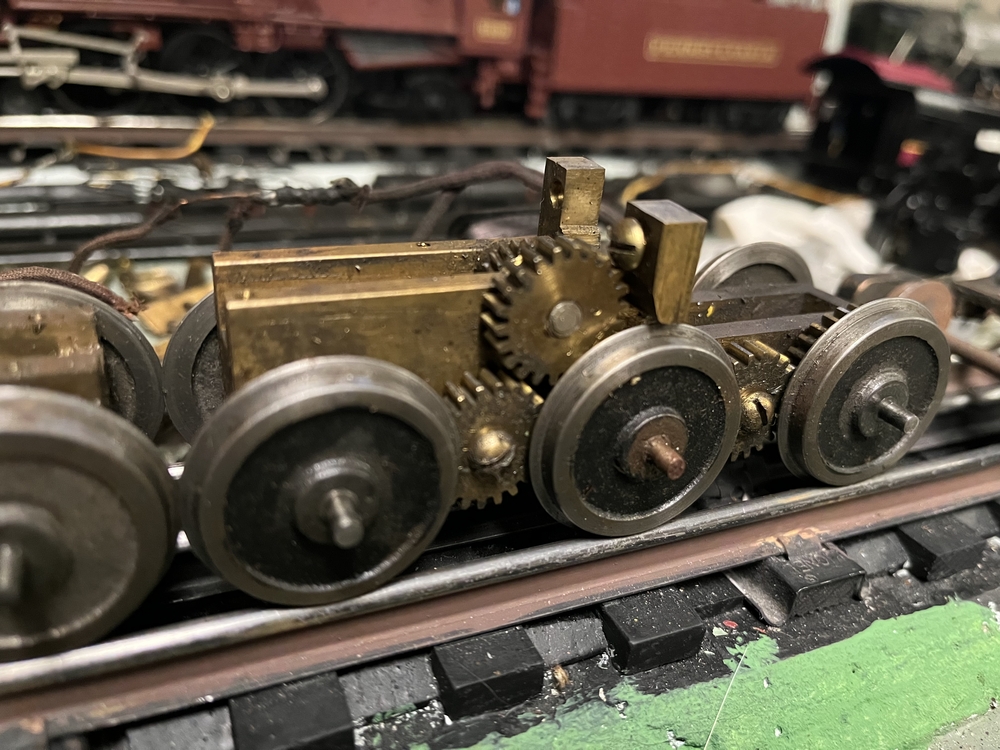
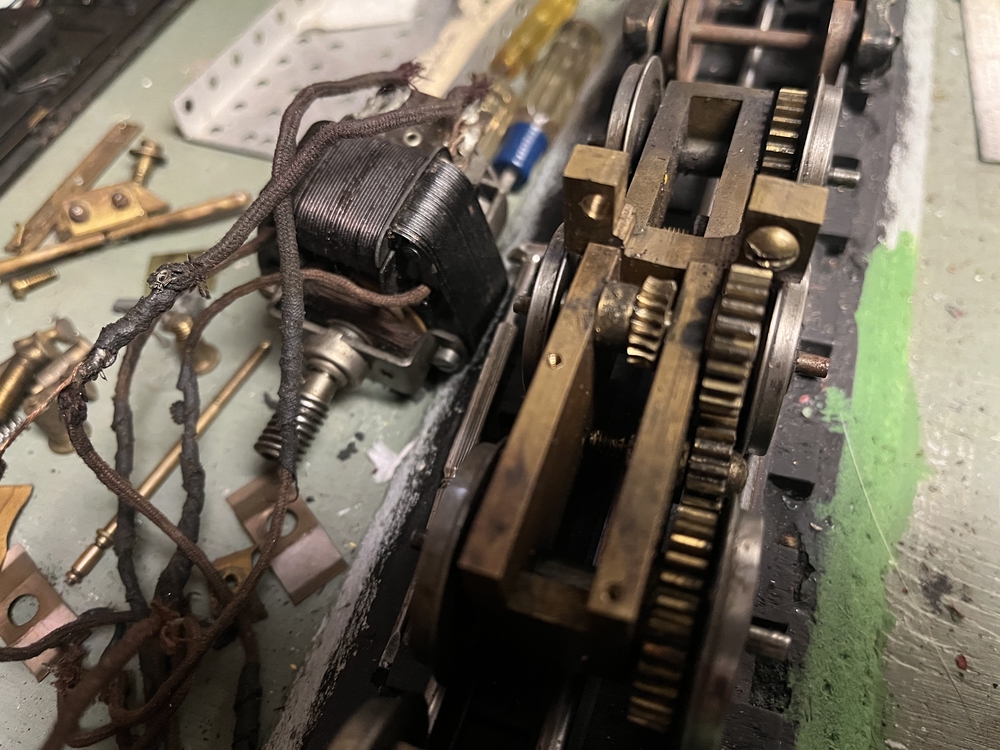
Dennis asks a couple of good questions. Let's start with the last photo:
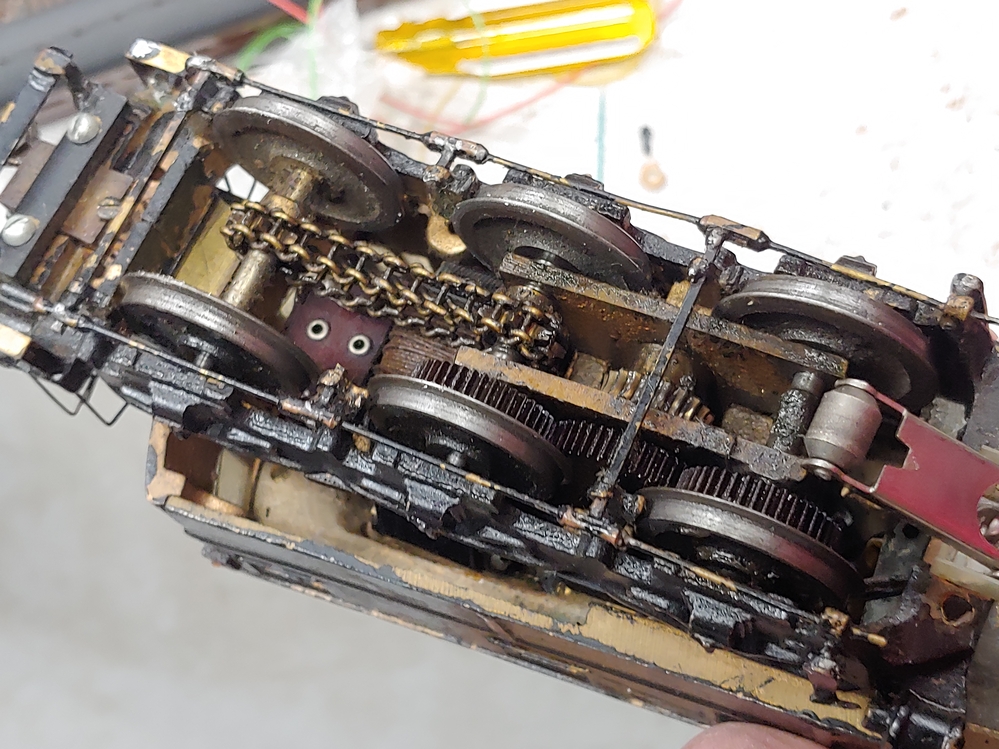
As best as I can tell from the early adverstisments and P&S circulars, the first version of the P&S EP-3 was equipped with a two-axle-per-truck drive. This was the drive shown in the photo above but without the chain drive to the third axle. I have a model so equipped. The second version added the chain. A later version had a three-axle drive with all axles powered with gears -- no chains.
The motor mounting configuration is less clear, and there seems to be a lot of different configurations out there. I believe Carey's EP-3 shown here is in the original configuration, which is distinguished by the upside down motor and the spur gears to the worm shaft:
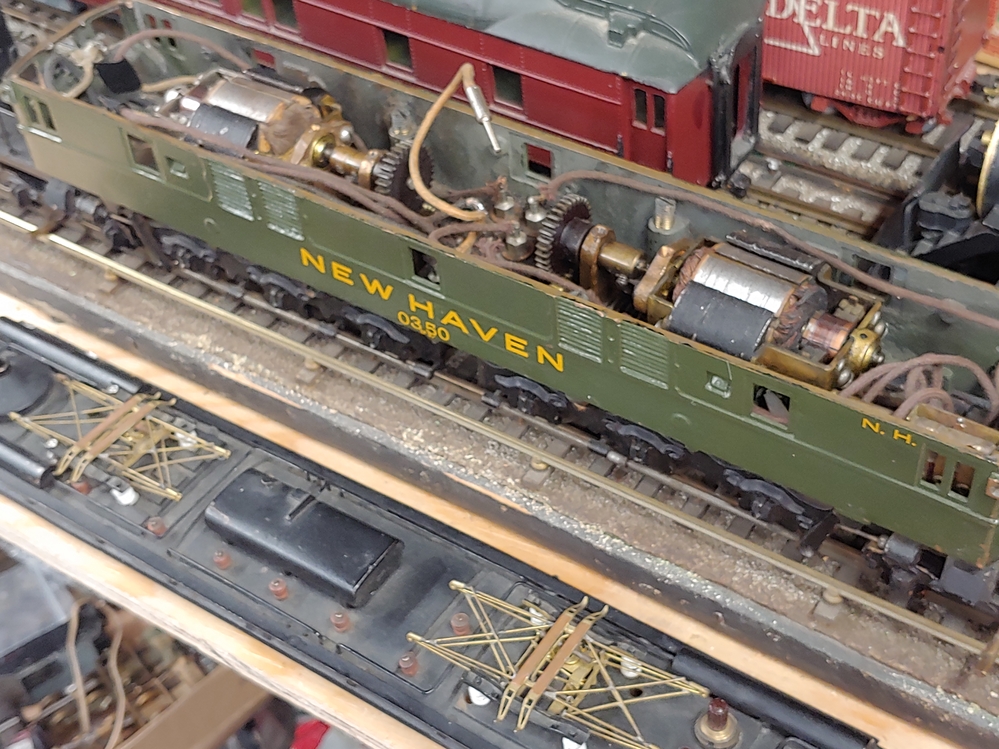
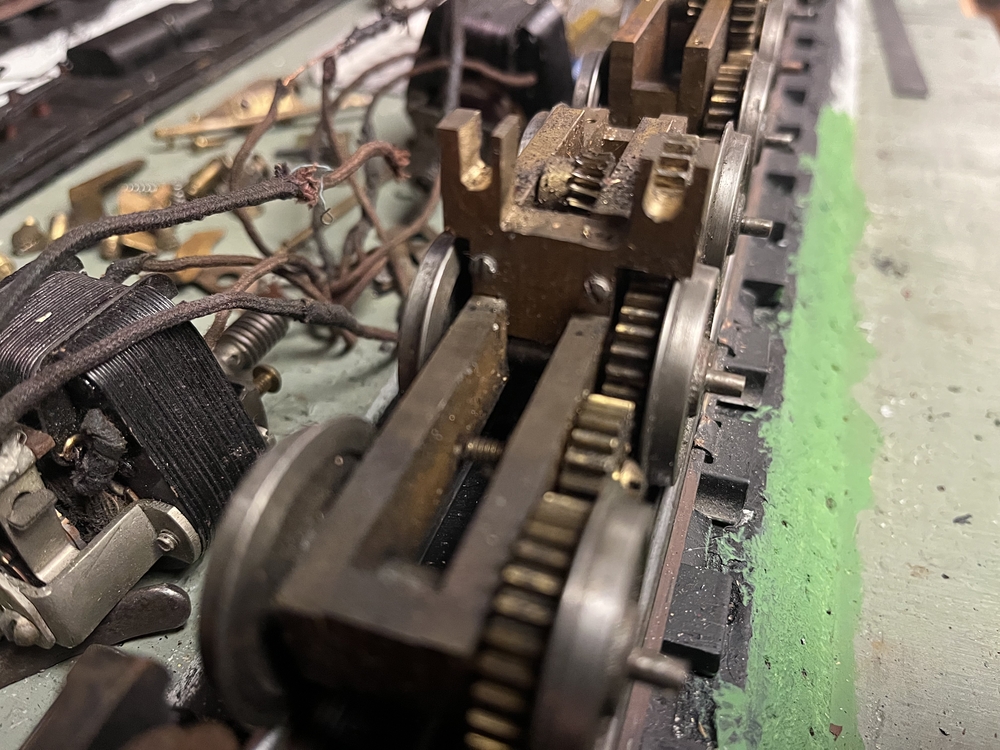
The lower worm shaft can be seen in this photo:
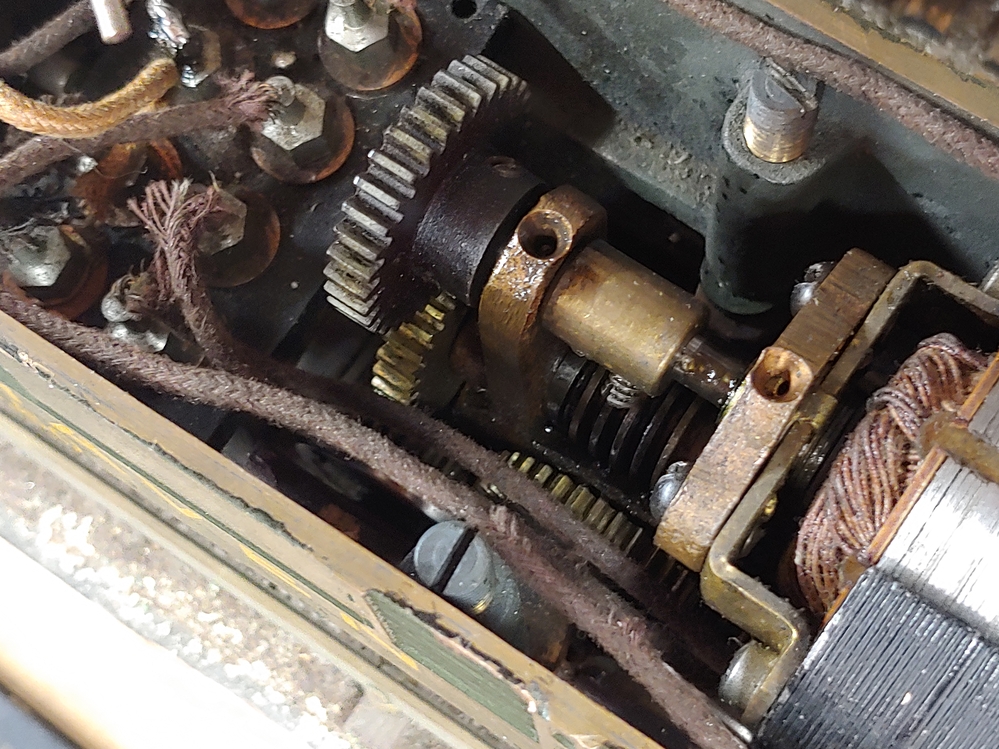
This drive could be set up with either one or two motors. In a one-motor setup, a speedometer-cable flexshaft connects the two worm shafts. This shaft would not be necessary with a two-motor setup like Carey's, but it could be used to improve starting performance. I would be interested in seeing photos of the underside of this model to see the rest of the drive configuration.
More documentation on the EP-3 has surfaced since the article in OST #98 was written (five years ago). A P&S blueprint shows a motor setup similar to the one on this model:

I have also seen the chassis for this setup sold on eBay:

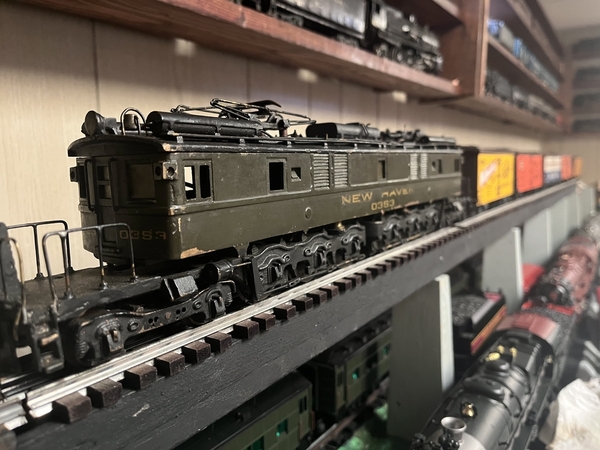
Note the three-axle gear drive. I am not sure why the motor brackets on Dennis's model are so crude, but perhaps the originals got lost, or perhaps this is a conversion from an earlier setup. The original tower setup does not have a particularly strong bearing design for the tower gears. I might guess that these would wallow out sooner than they should have and that people would reconfigure the drive to keep the model running.
Jim

 :